Interactive Toys for Pets: A Design-Forward Buyer's Guide
August 1, 2026 · Artelta
Interactive Toys for Pets: A Design-Forward Buyer's Guide
Choose the interactive toy that matches your pet's primary drive, fits your home's scale and finish, and features washable, replaceable components. That single rule covers most buying decisions. Three quick checks sharpen it further:
- Primary drive: Is your pet food-motivated, prey-driven, social, or a problem-solver? The drive determines the category.
- Home fit: Consider the toy's footprint, material finish, and noise level relative to your living space.
- Durability and hygiene: Prioritize machine-washable covers, USB-C charging on electronics, and replaceable parts.
Artelta's curated collection includes The Fetch for prey-driven dogs and The Companion for social and smaller-space play. Every pick is vetted by an in-house team of pet enthusiasts and ships with complimentary delivery and easy returns.
Table of Contents
- How do you match an interactive toy to your pet's primary drive?
- What are the main categories of interactive pet toys?
- Safety, hygiene, and the inspection protocol every owner should follow
- How to introduce a new toy and keep it engaging over time
- Choosing for your home: materials, scale, and aesthetics
- What should you check before buying an interactive toy?
- Artelta's curated picks for design-forward pet enrichment
- Key Takeaways
- A curator's perspective on design and vetted safety
- Artelta's curated interactive toy collection
- Useful sources
How do you match an interactive toy to your pet's primary drive?
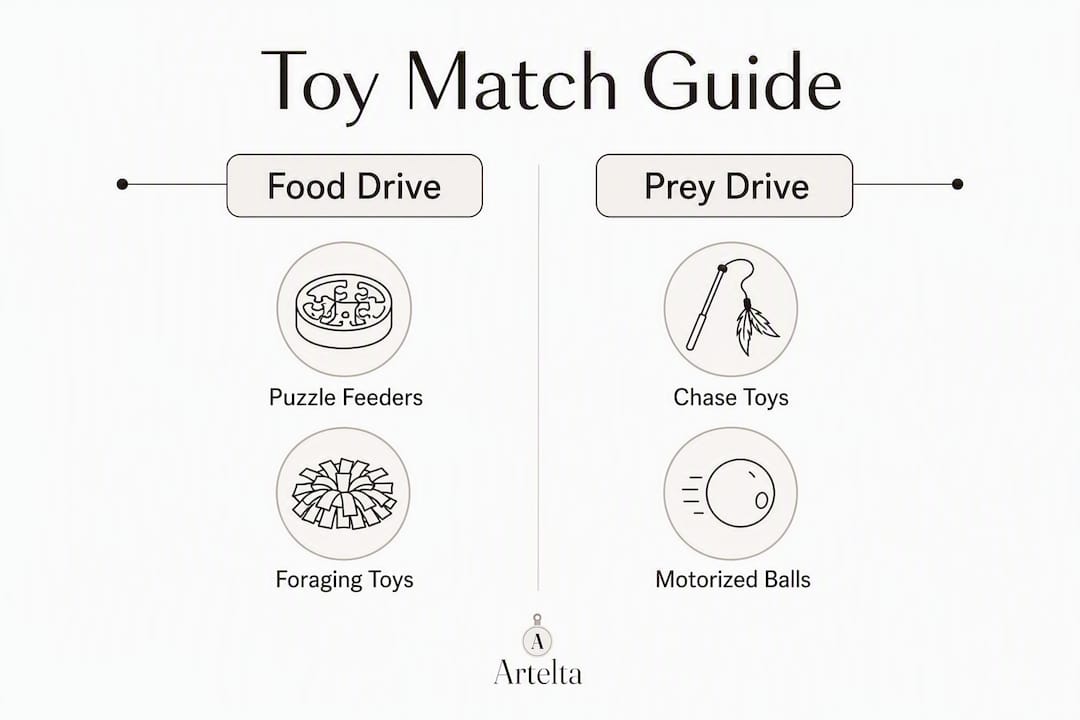
Matching toy type to drive produces better engagement and reduces frustration. Food-motivated pets thrive with puzzle feeders; prey-driven pets respond to wand toys and motorized simulators. The table below maps each drive to the right category.
| Primary Drive | Common Signs | Best Toy Types | Play Style to Expect | |---|---|---|---| | Food / foraging | Sniffs everything, finishes meals fast | Puzzle feeders, treat dispensers, snuffle mats | Slow, methodical, nose-led | | Prey / chase | Stalks, pounces, tugs | Motorized prey toys, wand toys, tug ropes | Intense bursts, short sessions | | Social / play | Brings toys to you, seeks contact | Owner-involved wand toys, fetch items | Collaborative, moderate duration | | Problem-solving | Opens cabinets, watches closely | Multi-step puzzles, hide-and-seek plush | Patient, persistent, self-directed |
Age and size matter too. Puppies and kittens need lower difficulty settings and softer materials. Senior pets often prefer foraging toys over high-motion options. Large breeds require toys rated for higher chew and pull forces; a toy sized for a terrier will not hold up to a Labrador.
Pro Tip: Place a small treat under a folded towel and watch your pet's response for 60 seconds. A dog that noses the towel methodically is food-driven; one that bats and pounces is prey-driven. That 60-second test is usually enough to confirm the dominant drive.
What are the main categories of interactive pet toys?
Interactive play reduces anxiety and destructive habits by giving pets a safe outlet for natural instincts. Here are the core categories:
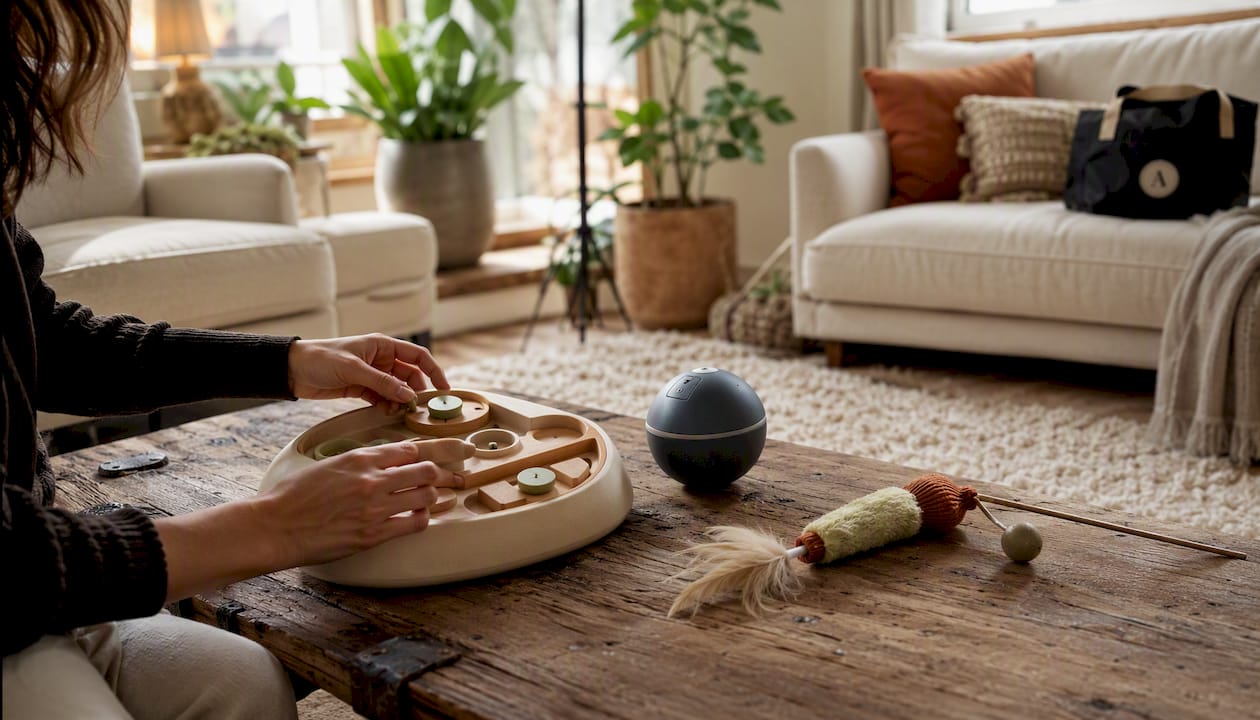
- Puzzle feeders and treat dispensers. Slow down fast eaters and make mealtimes mentally engaging. Best for food-driven dogs and cats. Moderate noise; most are dishwasher-safe.
- Snuffle mats and foraging toys. Fabric-based, nose-led enrichment. Excellent for anxious pets. Machine-washable; low noise; compact footprint.
- Motorized prey-style toys. Simulate moving prey for cats and prey-driven dogs. Require USB-C or battery power; covers should be removable and washable.
- Wand and tug toys. Owner-involved; strengthen the human-pet bond. Durable materials matter most here. Not suitable for unsupervised use.
- Slow feeders and food puzzles. Flat or bowl-format; reduce bloat risk and extend mealtime. Easy to clean; low aesthetic footprint.
- Responsive and motion-activated toys. React to a pet's movement; useful for cats left alone during the day. Noise level varies; check decibel ratings before buying.
- Plush hide-and-seek toys. Squeaky figures inside a plush shell. Satisfying for dogs with a retrieval instinct. Fabric components should be inspected after every session.
Each category serves a different behavioral need. Rotating across two or three types keeps enrichment varied without requiring a large toy collection.
Safety, hygiene, and the inspection protocol every owner should follow
Follow this protocol consistently to keep play safe and toys lasting longer:
- Inspect before every session. Check for cracks, fraying seams, loose parts, or compromised material. Retire any toy showing these signs immediately.
- Remove electronic modules before washing. Water damage to circuits is irreversible and can create a shock hazard.
- Wash fabric components weekly. Use unscented detergent; avoid essential-oil-based scents on fabric toys, which can act as respiratory irritants for both dogs and cats.
- Rotate the toy library. Cycling toys in and out prevents habituation and extends the useful life of each item.
- Check battery compartments. Loose covers on battery-operated toys are a swallowing hazard. CPSC guidance on battery-operated products highlights labeling and access requirements worth applying to pet electronics.
Material guidance: Favor food-grade silicone and natural rubber for any toy that contacts a pet's mouth. Both materials resist bacterial buildup, tolerate repeated washing, and are free of the plasticizers found in lower-grade PVC alternatives. When a toy combines fabric and hard components, confirm that each material is listed separately and that none contain heavy-element pigments.
Pet product manufacturers are not subject to the same uniform safety standards as children's toy makers. Large dogs can generate significant pull forces during play, so ask vendors for mechanical stress testing data before purchasing for a strong chewer.
Pro Tip: For modular puzzle toys, photograph the assembled configuration before disassembly. Reassembly is faster and you can confirm no small parts are missing before the next session.
How to introduce a new toy and keep it engaging over time
New toys lose novelty fast without a structured introduction. Toy rotation is an evidence-backed method to restore interest after habituation sets in.
Introduction steps:
- Supervise the first two or three sessions fully.
- Use a high-value treat to build positive association with the toy.
- Start at the easiest difficulty setting; increase complexity only after the pet solves the current level reliably.
- Keep initial sessions to 10–15 minutes to avoid frustration.
Rotation protocol:
- Offer a toy for five to seven days, then retire it for a week.
- Reintroduce retired toys as "new" items; most pets respond with renewed interest.
- Aim for 15–30 minutes of dedicated interactive play daily, spread across two or three short sessions.
Watch for these behavioral cues:
- Ignoring the toy after 2–3 minutes: difficulty is too high or the drive match is wrong.
- Destructive chewing of the toy: drive is prey/tug but the toy is a puzzle feeder; switch categories.
- Panting, pacing, or vocalizing: signs of overstimulation; end the session and offer calm enrichment instead.
Unsupervised use is appropriate only for durable, single-piece toys with no small removable parts. Wand toys, plush hide-and-seek sets, and any toy with electronic components require supervision.
Choosing for your home: materials, scale, and aesthetics
Design-conscious owners rarely want a neon plastic toy dominating the living room. The good news: premium materials and neutral finishes are also the safest and easiest to clean.
- Preferred materials: Matte food-grade silicone, natural rubber, and undyed or naturally dyed textiles. These read as premium, tolerate repeated washing, and age gracefully.
- Scale for small spaces: Choose vertical play structures for cats and compact puzzle feeders that store flat. A snuffle mat rolls up and disappears into a basket between sessions.
- Noise management: Motorized toys vary widely in decibel output. Position motion-activated toys away from hard floors and walls, which amplify sound. Look for brushless motors in higher-end options.
- Storage-first thinking: A dedicated woven basket or ceramic bowl for toys doubles as decor. Toys that look intentional when stored are easier to keep out of sight when guests arrive.
Pro Tip: Choose toys in your home's existing neutral palette. Terracotta, slate, and warm white finishes are increasingly available in premium pet products and require no extra effort to integrate into modern interiors.
What should you check before buying an interactive toy?
Use this checklist at checkout:
- Drive match confirmed (food, prey, social, or problem-solving)
- Material listed as food-grade silicone, natural rubber, or tested textile
- Covers are machine-washable or replaceable
- Electronics charge via USB-C; battery compartment is secure
- Vendor offers a warranty or easy returns
- Size and chew-strength rating appropriate for your pet's breed and age
- Supervised or unsupervised suitability clearly stated
Enrichment toys and specialty accessories are among the fastest-growing pet-industry categories, and pricing varies widely. Here are some example price ranges by category and typical premium features.
Higher prices are justified when a toy offers replaceable components, tested construction, and a finish that holds up to daily use, making them a cost-effective choice over frequently replaced cheaper toys.
Artelta's curated picks for design-forward pet enrichment
Artelta's selection is vetted by an in-house team of pet enthusiasts who evaluate each product for design integrity, material safety, and behavioral fit before it reaches the storefront.
- The Fetch: Designed for prey-driven and play-motivated dogs. The construction supports active tug and retrieval sessions, with materials chosen for durability and a clean aesthetic that works in modern interiors.
- The Companion: Suited to social and smaller-space play for both dogs and cats. A considered choice for apartment living or multi-pet households where footprint and noise matter.
On vetting: Every Artelta product is reviewed for material safety, construction quality, and design coherence before it is listed. The team looks specifically at washability, part replaceability, and how the toy performs across different pet sizes and temperaments. Products that do not meet those standards are not listed, regardless of price point.
Every order ships with complimentary delivery. Returns are straightforward. Browse the full collection at Artelta's shop to find the right match for your pet's drive and your home's aesthetic.
Key Takeaways
The most effective interactive toy matches your pet's primary drive, uses food-grade or tested materials, and includes washable or replaceable components that make long-term ownership practical.
| Point | Details | |---|---| | Match toy to drive | Food-motivated pets need puzzle feeders; prey-driven pets need motorized or wand toys. | | Prioritize hygiene features | Machine-washable covers and USB-C charging extend toy life and reduce replacement costs. | | Rotate to prevent habituation | Retire toys for one week, then reintroduce; aim for 15–30 minutes of play daily. | | Design and home fit matter | Matte silicone, natural rubber, and neutral textiles integrate into modern interiors without compromise. | | Artelta's curated picks | The Fetch and The Companion are vetted for drive fit, material safety, and design, with complimentary shipping. |
A curator's perspective on design and vetted safety
The conventional wisdom in pet retail is that function is enough. Pick something durable, toss it to the dog, done. What that view misses is that the toys living in your home are part of your home. A product that works but looks out of place, or that you retire after two months because the cover cannot be washed, is not actually a good product.
The vetting process at Artelta starts with behavioral fit and material safety, then asks whether the object is worth keeping. That last question is not vanity. A toy that earns a permanent spot in your living space gets used more consistently, which means your pet benefits more. Design and enrichment are not competing priorities.
Artelta's curated interactive toy collection
Artelta brings together design-forward pet enrichment that you will actually want to keep out. Every product in the collection is selected for material quality, behavioral fit, and visual coherence with contemporary interiors. Complimentary shipping applies to every order, and the return process is straightforward if a product is not the right fit.
Browse the full range and find the right match for your pet's drive and your home at Artelta's shop.
Useful sources
- Why mental stimulation matters for pets — Happy Tails Animal Hospital's guidance on how boredom-driven behaviors respond to consistent mental enrichment targeting a pet's dominant drive.
- Mental enrichment for pets — Alford Avenue Veterinary Hospital's overview of drive-based toy matching and evidence-backed toy rotation protocols.
- Interactive toys: definition & benefits — Covers how problem-solving and movement-based toys reduce anxiety and destructive habits by mirroring natural behaviors.
- Why interactive toys are great for smart pets — Short Pump Veterinary Center's recommendation for 15–30 minutes of dedicated interactive play daily and the cognitive benefits of puzzle feeders.
- Toy Safety Business Guidance | CPSC.gov — CPSC guidance on battery-operated toy labeling and safety requirements; a useful reference when evaluating electronic pet toy construction.
- Interactive pet toys buying guide — Practical guidance on prioritizing USB-C charging and machine-washable covers for electronic pet toys.
- Complete guide to interactive plush toys — Inspection protocol source covering rotation, module removal before washing, and material safety for plush interactive toys.