How to Reduce Dog Shedding in the House
July 18, 2026 · Artelta

Anyone searching for how to reduce dog shedding in the house has usually already tried the obvious things. More vacuuming. A lint roller by the door and another in the car. Perhaps a resigned acceptance that the sofa is simply the dog's colour now. The trouble with all of these is that they address hair after it has already left the dog. The real leverage lies earlier, at the coat itself, before loose hair has a chance to migrate.
Shedding cannot be stopped, and it shouldn't be. It is how a healthy coat renews itself. But the amount of hair that ends up on your floors is very much within your control. What follows is a system, not a trick: catch hair at the source, support the coat from the inside, and make the house itself easier to keep clear.
Understand what your dog's coat is doing
Not all shedding is equal. Double-coated breeds such as huskies, shepherds, retrievers, and corgis carry a soft undercoat beneath their outer guard hairs, and it is this undercoat that "blows" in dramatic seasonal waves, typically spring and autumn. Single-coated breeds like poodles and many terriers shed far less, while short-coated breeds such as labs and beagles shed steadily year-round in small, needle-like hairs that weave into fabric.
Knowing which pattern you're living with sets expectations. A husky in May is going to produce astonishing quantities of hair no matter what you do; the goal is to decide where that hair comes off. Year-round shedders respond best to steady, frequent maintenance rather than occasional marathons.
One caution before the system: a sudden change in shedding is not a housekeeping problem. Bald patches, hair coming out in clumps outside the normal season, or flaky and irritated skin can signal allergies, parasites, stress, or a hormonal issue, and that deserves a vet visit rather than a better brush.
Brush on a schedule, not on a whim
The single most effective thing you can do is also the least surprising: regular brushing, matched to the coat. For most shedding breeds, that means a proper session two to four times a week, increased to daily during seasonal blows. Ten minutes of brushing removes hair that would otherwise spend the next three days distributing itself across your home.
Frequency beats intensity. A short session every other day keeps ahead of the shed cycle; a single heroic hour on Sunday does not, because hair loosens continuously. The right tool matters too: an undercoat rake or de-shedding tool for double coats, a rubber curry brush or grooming mitt for short coats, a slicker for long or silky hair. Using a tool designed for a different coat type is how brushing comes to feel useless.
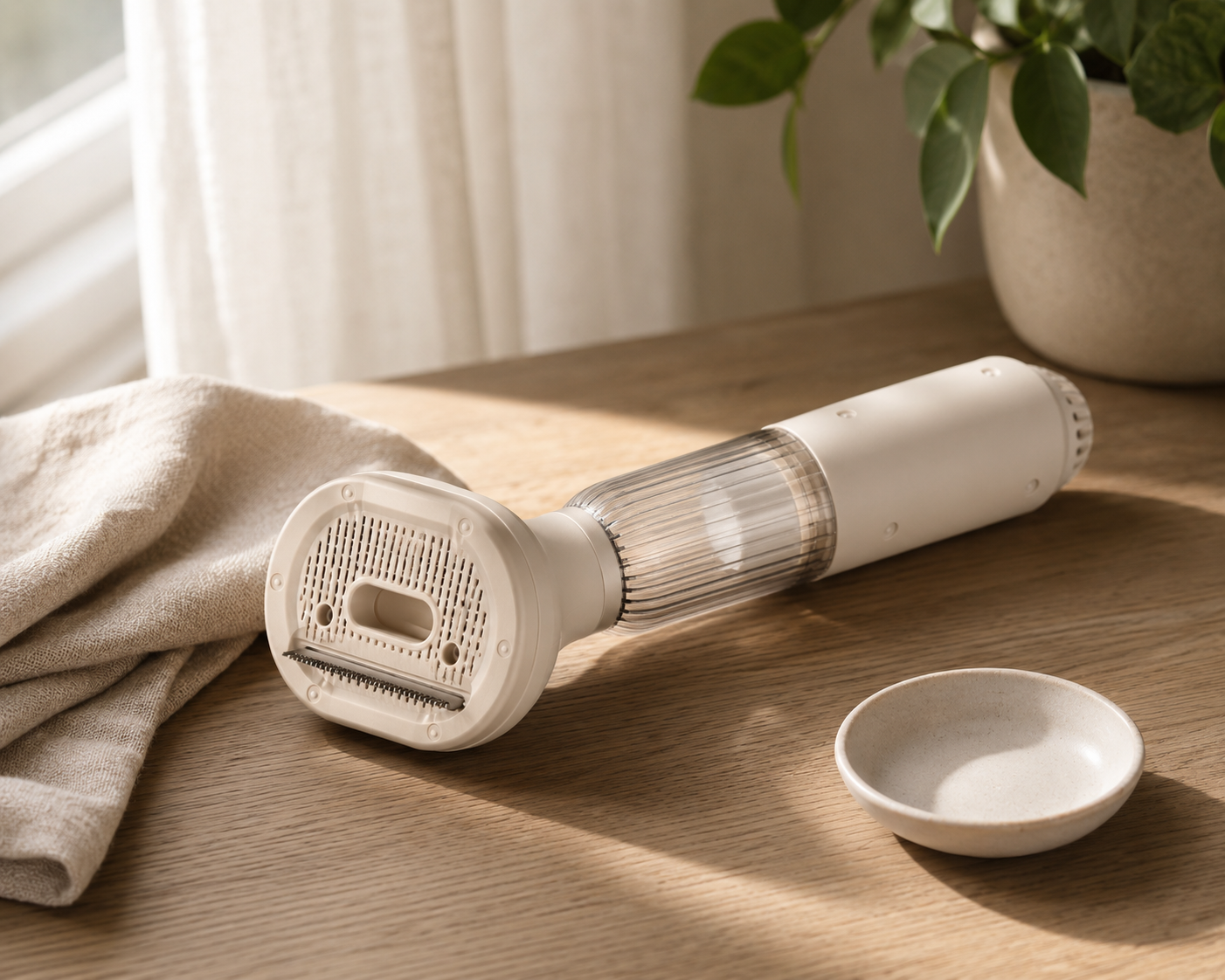
The perennial complaint about brushing indoors is that it makes its own mess, with clouds of loosened hair drifting off the brush and onto exactly the floors you were trying to protect. Brushing outdoors solves this in summer and is miserable in February. This is the problem grooming vacuums were built for: something like the Compact Grooming Vacuum draws hair into a canister as you brush, so the de-shedding session stops being a source of the very hair you're managing. However you solve it, the principle stands. Hair captured during grooming is hair that never reaches the couch.
Feed the coat from the inside
A surprising amount of excess shedding traces back to skin health, and skin health traces back to diet. Dry, undernourished skin releases hair faster and produces more dander alongside it.
The essentials are unglamorous. A complete diet with adequate protein, first: hair is roughly 90 percent protein, and a coat is one of the first places a marginal diet shows. Omega-3 fatty acids, from fish-oil supplements or foods rich in them, are the best-supported addition for skin and coat condition; many owners notice a softer, less shed-prone coat within six to eight weeks of adding them. And water, always. Dehydrated skin sheds more readily. If you're considering supplements, a quick word with your vet about dosing is worth more than the label's suggestion.
Bathing helps too, in moderation. A monthly bath with a gentle, dog-formulated shampoo loosens hair that brushing then removes. Bathe, dry thoroughly, brush the next day, and you'll capture a remarkable amount in one cycle. Over-bathing, though, strips the natural oils that keep skin supple, and dry skin sheds more. Once a month is plenty for most dogs unless they've found something to roll in.
Make the house work with you
Even with a good grooming rhythm, some hair will land. The difference between a hairy house and a manageable one is mostly about controlling where it lands and how easily it leaves.
- Give the dog defined territory. A washable blanket on their preferred sofa corner, a bed they actually like in each main room. Hair concentrates where the dog rests; washable layers turn cleanup into laundry.
- Choose fabrics deliberately. Tightly woven materials like leather, microfibre, and canvas release hair with a swipe. Loose weaves, velvet, and wool hold it like Velcro. This matters more for the next sofa than the current one, but throws can convert what you already own.
- Vacuum little and often, with the right head. A rubber-bristled or turbo brush head lifts embedded hair better than suction alone. Twice a week in the main rooms outpaces the accumulation; a robot vacuum running daily does the same without your involvement.
- Dryer sheets and rubber gloves for the stubborn bits. A slightly damp rubber glove swept over upholstery gathers hair into easy rolls. It is oddly satisfying.
Humidity deserves a mention: very dry indoor air, common in winter with the heating running, dries skin and accelerates shedding. A humidifier helps the coat as much as it helps your own skin.
The rhythm that makes it stick
None of this works as a one-off. What works is a rhythm: a short brushing session a few evenings a week, a bath and thorough de-shed once a month, fish oil with dinner, blankets in the wash on Sundays, the vacuum making its rounds. Fifteen minutes here and there, most of it pleasant time spent with your hands on your dog.
Owners who settle into a routine like this tend to report the same thing. Not a house with no hair, which was never on offer, but a house where hair is no longer the first thing they notice. The dog still sheds. It just stops being the dog's decision where.