How to Keep Your Dog Entertained While You're at Work
July 30, 2026 · Artelta

Anyone trying to work out how to keep a dog entertained while at work knows the particular weight of the morning goodbye. The coat goes on, the keys come out, and a pair of eyes follows you to the door. Then eight or nine hours pass in an apartment where, from the dog's point of view, absolutely nothing happens.
Here is the honest framing: a dog's day does not need to be full. It needs to be punctuated. Dogs sleep twelve to fourteen hours out of every twenty-four, much of it while you're gone. The problem is not the sleeping. The problem is the waking stretches in between, when an under-occupied dog goes looking for a project and finds your shoes, your sofa cushions, or the corner of the rug. Fill those stretches with something better and the whole day changes shape.
Start the day with a withdrawal, not a deposit
The single most effective thing you can do for the home-alone hours happens before you leave. A dog that starts the day with twenty minutes of real exercise settles into the quiet hours instead of pacing through them. A proper walk with time to sniff, a game of fetch in the yard or hallway, even a few minutes of tug does more for the 9 to 5 than any toy left behind.
Sniffing deserves special mention. Ten minutes of unhurried sniffing tires a dog in a way ten minutes of trotting does not, because scent work is cognitive effort. If the morning only allows one thing, make it a slow walk rather than a fast one.
Feed breakfast after the walk, not before, and consider feeding it in a way that takes effort: a snuffle mat, a puzzle feeder, or simply scattered across the kitchen floor. A dog that spends fifteen minutes working for breakfast starts the alone-time already mentally spent, in the best way.
Leave the right things behind
What you leave out matters more than how much you leave out. A floor covered in every toy the dog owns reads as background noise by Tuesday. Rotation is the trick: three or four toys out at a time, swapped weekly, so familiar things return with some novelty attached.
Think in categories rather than quantity:
- Something to work on. A frozen stuffed toy or a long-lasting chew gives the first hour a job. Freezing wet food into a rubber toy can stretch twenty minutes of licking into an hour.
- Something to find. Hide a few treats around the home before you leave. A dog that has learned the morning treasure-hunt ritual starts searching the moment the door closes, which neatly overwrites the departure moment itself.
- Something that moves. This is the gap most homes have. Chews and puzzles are passive; once solved, they're done. Movement is what a dog's attention is actually built for.
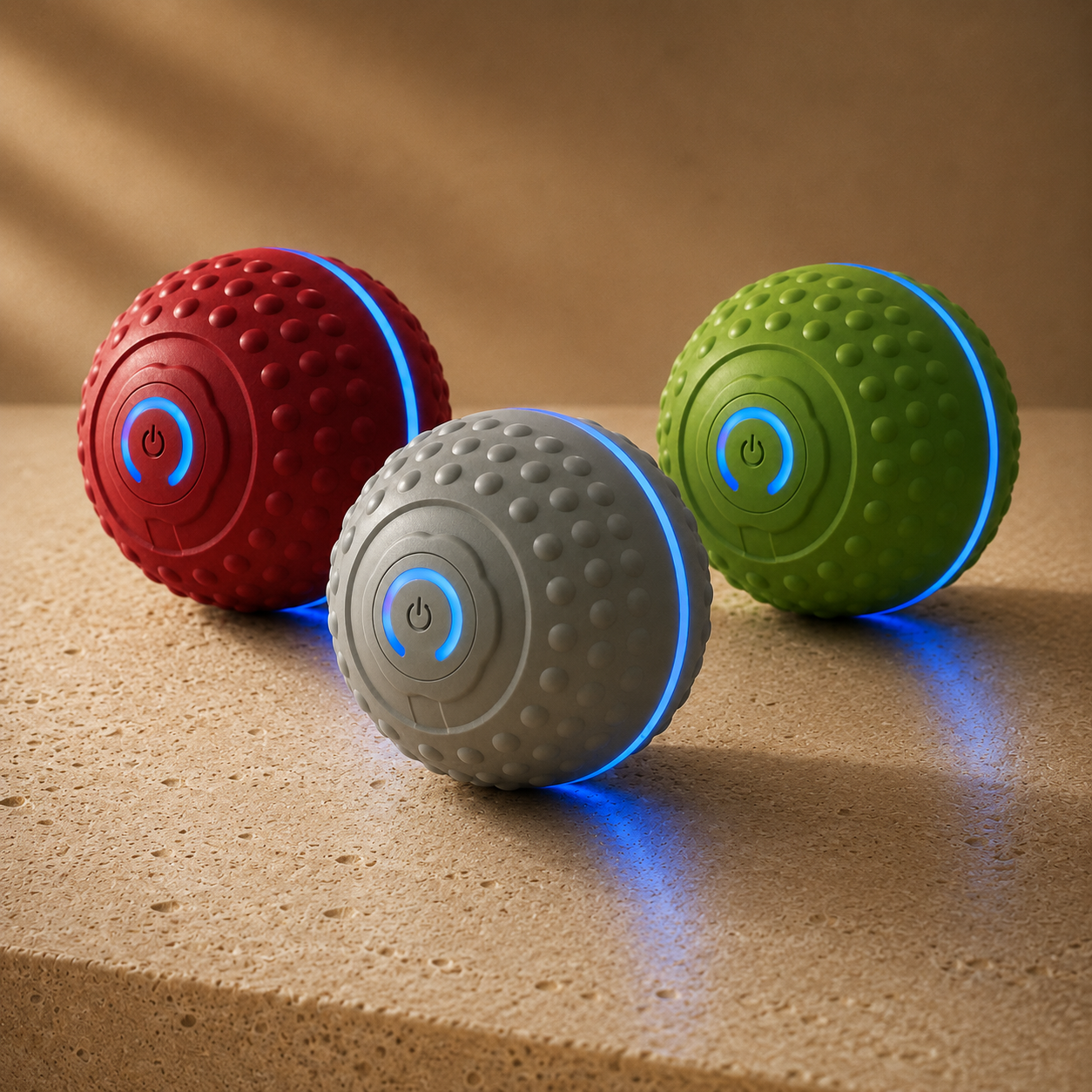
That last category is where the technology has become interesting. Motion is what triggers a dog's chase instinct, and until recently there was no good answer to "who throws the ball at 1 p.m.?" Self-rolling smart balls now fill that slot. Something like The Fetch moves on its own, senses and dodges obstacles the way prey would, and wakes when your dog pats it, then powers itself down when the game is over. It is built from durable chew-resistant material for players who finish a game by trying to eat the winner. The point is not that a ball replaces you. It is that the midday hours get one genuinely unpredictable playmate in them.
Structure the space, not just the schedule
Where the dog spends the day shapes how the day goes. A few adjustments cost nothing:
- A window seat, or no window seat, depending on the dog. Some dogs spend a contented hour watching the street. Others treat every passing courier as a personal affront and spend the day rehearsing outrage. Know which one lives with you and arrange the furniture accordingly.
- Sound. An empty apartment is acoustically strange. A radio at low volume or a long "dog TV" video softens the silence and blurs the startling noises from the corridor.
- A proper resting place away from the door. Dogs that wait at the door all day rest badly. A bed in the room where the household actually lives, with something that smells of you, gives the day a home base.
Break the day in half if you can
Every option above works better when the day has a hinge in the middle. A lunchtime visit from you, a neighbour, a friend, or a dog walker resets the clock: a toilet break, ten minutes of play, and the afternoon becomes a manageable stretch instead of the second half of a marathon. Twice-weekly daycare does the same job for social dogs and heavy chewers who need more supervision than an empty flat can offer.
If none of that is available, a camera pays for itself in information alone. Not to watch guiltily from your desk, but to learn what your dog's day actually looks like. Most owners discover more sleeping than they feared. Some discover the 2 p.m. restless hour, which tells you exactly when the found-treats or the self-playing toy earn their keep.
Know the difference between boredom and distress
Everything in this article addresses boredom, and boredom is very fixable. But chewed doorframes, howling that starts the moment you leave, or a dog that won't touch food until you return are signs of genuine distress about being alone, and no toy addresses that. If the destruction is concentrated at exits, or the neighbours report crying that runs for hours, speak to your vet or a qualified behaviourist. Enrichment helps those dogs too, but as part of a plan, not instead of one.
For the ordinary case, though, the bored dog with a long day and nothing on the calendar, the fix is pleasantly unheroic. Tire the body in the morning. Make food effortful. Rotate the toys. Give the afternoon something that moves. You will still get the eyes at the door, because you are the best thing in your dog's life and that is not going to change. But you'll come home to a dog that spent the day busy, and to a sofa with both arms still attached.