How to Keep an Indoor Cat Entertained (Especially When You're Out)
July 30, 2026 · Artelta

The question of how to keep an indoor cat entertained usually arrives with a specific scene attached. A cat asleep on the same cushion at 8 a.m. and, apparently, still there at 6 p.m. A basket of toys, untouched. And somewhere in the back of the owner's mind, the nagging thought: is this a peaceful life, or just a small one?
It's a fair question. An indoor cat is safer than an outdoor one by every measure that matters, but the indoors comes with a job for the human: the outside world used to provide the hunting, climbing, and ambushing, and now you do. The encouraging part is that a cat's needs are surprisingly specific. Meet them, and a one-bedroom flat is genuinely enough territory for a rich feline life.
A cat's day is built around the hunt
Everything useful about cat enrichment follows from one fact: a cat is a predator that no longer needs to hunt, but never received the memo. The hunting sequence (stalk, chase, pounce, catch, "kill," eat) is wired in, and a cat that never gets to run the full sequence finds substitutes you may not love: ankle ambushes, 3 a.m. sprints, the slow deliberate push of a glass off the counter while maintaining eye contact.
The goal is not to entertain your cat constantly. Cats sleep and doze most of the day, and that is normal. The goal is two or three short, complete hunts every day. Ten minutes each. A wand toy that moves like a wounded bird, a toy mouse dragged behind the sofa, anything that lets the sequence finish with a real catch. End each session by letting the cat capture the prey properly, then follow with a few treats or a meal. Chase, catch, eat: the sequence closed, the predator satisfied.
Make the territory work harder
Before adding a single toy, look at the space vertically. A flat is small to a human because humans live on the floor. A cat that can patrol a bookshelf route, a window perch, and the top of a wardrobe lives in three times the territory without you moving a wall.
- One good window beats five toys. A perch at a window with birds, street life, or weather is daytime television for a predator. A bird feeder outside the window is prestige programming.
- Cardboard is enrichment. Boxes, paper bags with the handles cut off, the occasional rearrangement of furniture. Novelty itself is stimulation for an animal whose job is monitoring territory.
- Scratch posts where the household actually happens, not exiled to the spare room. Scratching is territorial broadcasting, and nobody broadcasts to an empty room.
- Feed the hunter. Ditch the bowl a few days a week. Puzzle feeders or kibble hidden around the flat turn dinner into foraging, which is what a cat's brain expects mealtime to cost.
The empty hours are the real gap
The routines above cover the time you're home. The harder problem is the workday: the 9 to 5, the dinner out, the errand loop that turns three short absences into a long afternoon. Wand toys don't wave themselves, and most static toys are, from a cat's perspective, dead prey. Cats notice the difference. Movement is the whole argument.
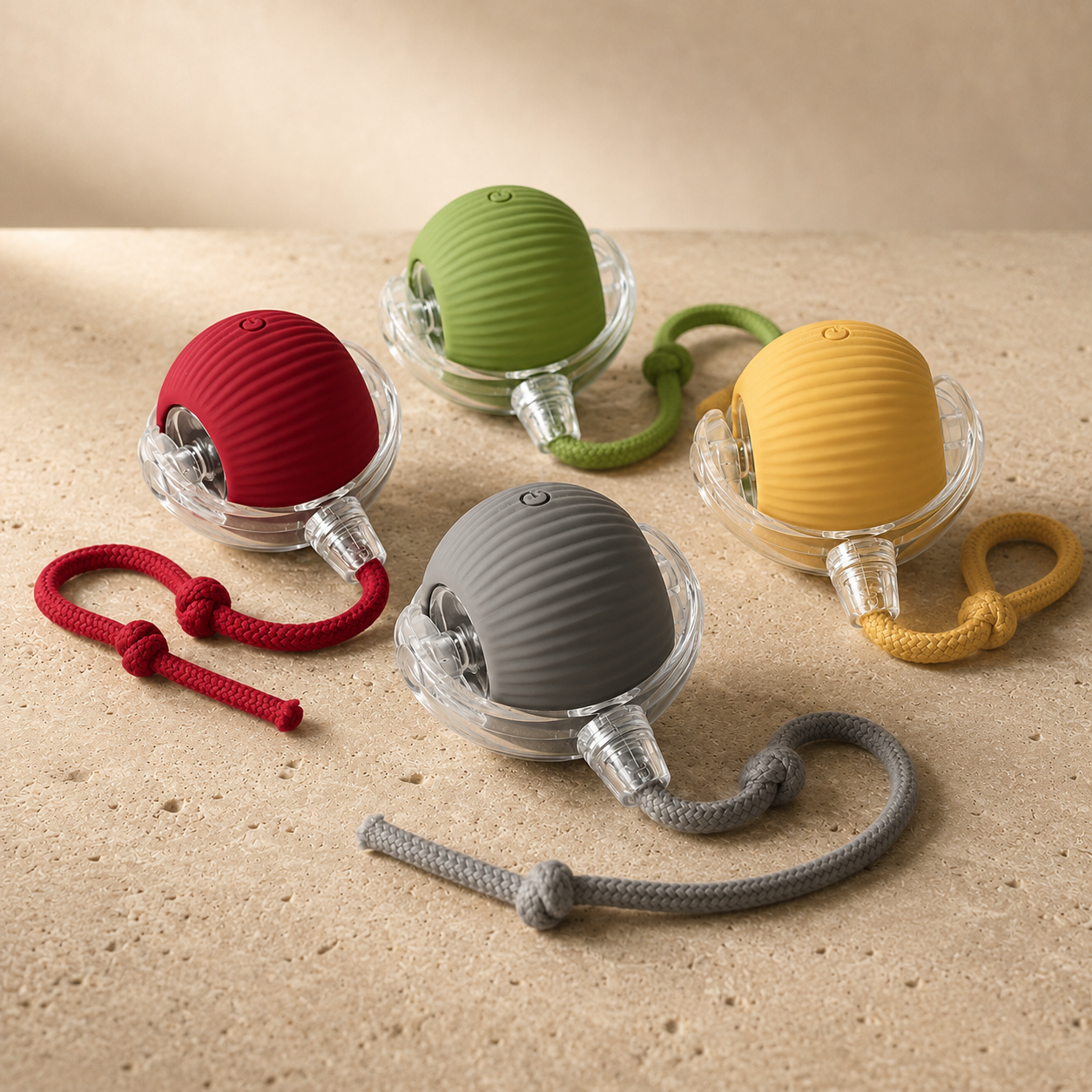
This is the one place where a powered toy earns its spot. The useful ones move on their own, erratically, the way something small and catchable would, and switch themselves off rather than running until the novelty dies. The Companion was built for exactly this slot: a small self-rolling ball that darts and dodges around obstacles like fleeing prey, with three speeds so a kitten's chaos and a senior's dignity are both catered for. It wakes when your cat bats it, naps when the game is over, and includes a rope attachment so it doubles as a wand-style toy when you're home and want in on the hunt. Quiet enough that it won't rule the room, sturdy enough in its silicone shell to survive being the prey.
One honest note on powered toys generally: introduce them like you'd introduce anything new to a cat, which is to say, let the cat make the first move. Set it out switched off for a day. Some cats pounce on day one; the more suspicious operators need a week of surveillance before deciding the thing is prey rather than intruder. Both are normal.
Rotate, ration, and respect the nap
Whatever mix of toys your cat ends up with, scarcity is what keeps them alive. A toy that is always available is furniture; a toy that appears twice a week is an event. Keep most toys in a drawer and rotate a few at a time. Retire the wand toy to a cupboard between sessions, partly for novelty and partly because unsupervised string is a genuine swallowing hazard.
And leave the sleep alone. Sixteen hours of dozing is a healthy cat's normal, not a symptom. The signs that a cat is under-stimulated are specific: overgrooming to the point of thin patches, aggression at ankles, relentless night activity, destructive scratching that ignores the posts, or eating as recreation. A cat doing none of those things and sleeping through your workday is not bored. It is a cat.
If those signs do appear and enrichment doesn't shift them within a few weeks, involve your vet, because several medical issues wear the same costume as boredom.
The shape of a good indoor day
Put together, a well-entertained indoor cat's day looks something like this: a hunting session before you leave, breakfast foraged rather than served, a window with a view and a territory with a skyline, something that moves during the long quiet middle of the day, and another proper hunt in the evening when the predator's clock strikes dusk. Twenty active minutes from you, a little architecture, and one reliable playmate for the hours in between.
None of it is elaborate. All of it is specific. The difference shows up not in a busier cat but in a calmer one: fewer ankle ambushes, quieter nights, and that particular settled confidence of an animal whose day, at some point, contained a successful hunt.